Browse Items (166 total)
Sort by:
Brookline House, 1910-1960
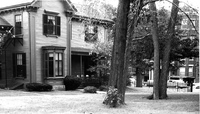
The College began leasing Brookline House in 1910 as a dormitory, providing rooms for 30 students. It was demolished in 1960 to make way for the construction of Mesick Hall.
Cypress Street Houses, circa 1918-1933
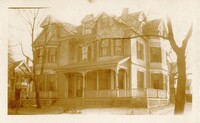
The College began leasing a house on No. 49 Cypress Street as a dormitory circa 1918. By 1924, the College was leasing an additional four houses on Cypress Street. The Cypress Street houses were closed in 1933, as the number of resident students had…
Dix Hall, 1953-2026
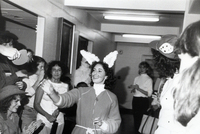
Dix Hall was completed in 1953 and was designed by the architectural firm the Austin Company. Dix Hall could house 120 students and was named after Dorothea Lynde Dix (1802-1887), a social and medical reform activist, whose will stipulated that her…
East House (Turner House), 1904-circa 1989
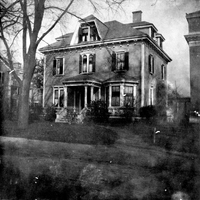
East House was included as part of the sale when the College purchased a 60,000 sq. ft. parcel of land on Brookline Avenue, Short Street, and Bellevue Street (later renamed Pilgrim Road) for $67,500 in July 1904.
Effective July 1, 1953, the…
Effective July 1, 1953, the…
Evans Hall, 1939-2026
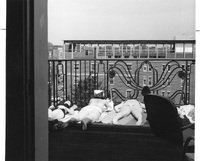
Construction for Evans Hall began in July 1938. The Hall was named after Maria Antoinette Evans, a widow of the former President of the United States Rubber Company. Despite having no direct ties to Simmons, Mrs. Evans bequeathed the College $100,000…
Francis Street Houses, circa 1916-1953
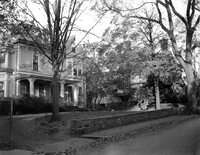
During World War I, the College began leasing houses on Francis Street. In the early years, this house was initially run as a private enterprise by women who were not affiliated with the College. While students ate lunch in the MCB cafeteria,…
Health Center, 1966-2026
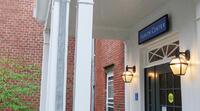
The Health Center, a two-story building, was built next to North Hall in 1966. Facilities included a basement with fifteen beds, examination rooms, a laboratory, and a kitchen on the first floor. The cramped health offices in the MCB were converted…