Nursing at Simmons, 1930s - 1950s
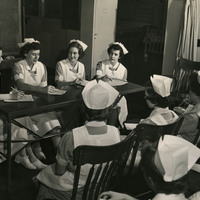
As the world around Simmons evolved, the nursing program sought to keep up and maintain its efforts to stay attuned to the needs of the community. Despite the challenges of the Great Depression, the nursing program at Simmons continued to develop throughout the 1930s. Indeed, in 1930, the program saw the highest ever enrollment of first year students in the five year program. The year's departmental report remarked, “This enrollment and the number of requests for information about the Five Year Programme seem to indicate that the importance of a good education for nurses is being recognized not only by leaders in the nursing profession but also by parents and to some extent by secondary schools.”
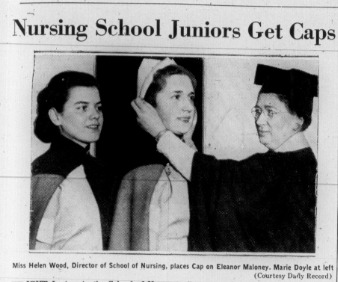
Throughout the 1930s, the nursing program at Simmons made adjustments to the curriculum to account for contemporary issues, as well as topics that students were particularly interested in. In 1932, a new seminar in "Rural Problems" was introduced and enjoyed a high enrollment of 41 students, 32 of whom studied Public Health Nursing. An emphasis was also placed on training students in psychiatric nursing. These updates to the curriculum helped prepare students with specialized training to serve their communities, whether they stayed in urban areas following their graduation or ventured into more rural areas.
Another major update the nursing program underwent in the 1930s was an addition of a three year program for graduates of hospital training schools who held their RN certification and desired a Bachelor's Degree. This program faced great success, and endured at Simmons for decades.
Throughout the war-time emergency, Simmons nurses contributed to the effort the best they could. At this time, the demand for nurses had never been higher. The service always needed more staff, and those who joined the service vacated positions in civilian hospitals at home that hospitals struggled to fill. The 1942 departmental report remarked, “our most conspicuous war service is the enlistment of our graduates in the Army or Navy Nurse Corps. We regret that we know of few enlistments of graduates earlier than the past few years, but among the names of those for whom we have information, we note First Lieutenants and Captains, as well as Second Lieutenants and Ensigns.” Alumni of Simmons nursing programs contributed to the war effort in myriad ways, including in these leadership capacities.
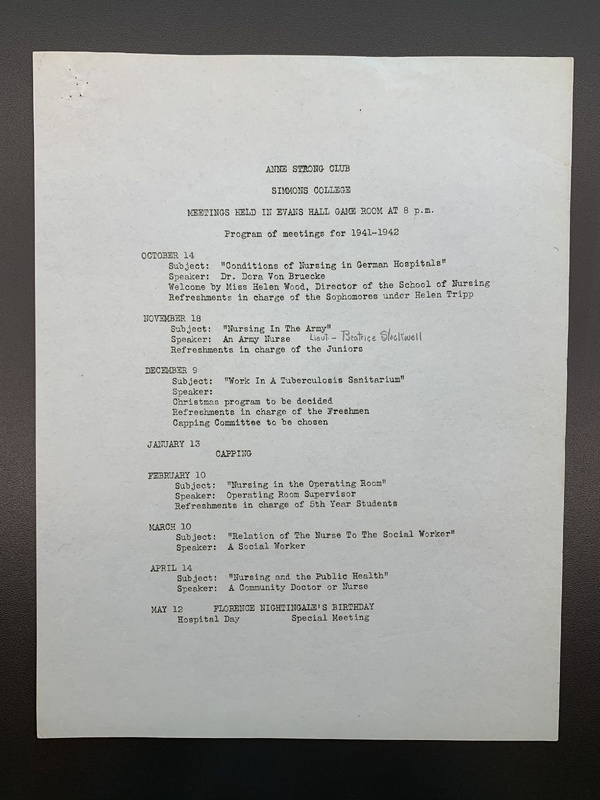
The document at right shows how students sought to keep themselves involved. During the 1941-1942 school year, the Anne Strong club held many meetings with topics pertaining to wartime nursing, including guest speakers who spoke on conditions of working in German hospitals and nursing in the army.
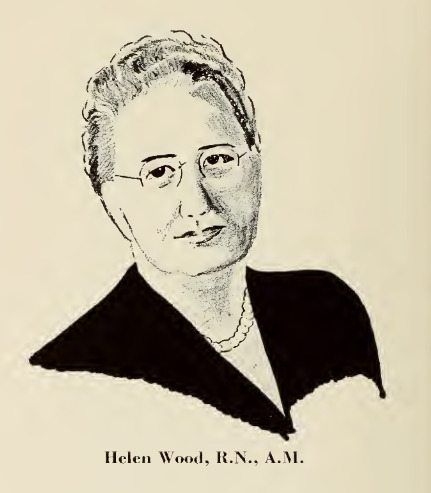
Under Helen Wood's direction, the school was reorganized from the School of Public Health Nursing, to the School of Nursing. In October 1934, Wood wrote, “The change of name indicates that we are trying to put added emphasis on the undergraduate course and will to a certain extent direct the clinical assignments of our students sent to the hospitals during their third and fourth years. Beginning with the class which entered this fall, the college will grant the nursing diplomas as well as the degrees.”
Throughout the years of World War II, Wood worked with students to identify and fill community needs. In 1941 and 1942, student newspapers reveal a student desire for a first aid course, and Wood was quick to offer one, open to all students, not only the nurses.
Wood was an accomplished nursing educator, and established the School of Nursing at the University of Rochester before coming to Simmons. Much like Anne Strong, Wood was a beloved faculty member who was recognized for her friendliness, ambitious spirit, and helpful nature. She focused intently on ensuring Simmons nurses were ready to work as leaders in the field following graduation. In a booklet published by the National League of Nursing Education, Grace L. Reid remarked, “So long as such women as Helen Wood are responsible for ideals and standards we can feel assured of inspired leadership and reasonable progress even though there may be tremendous odds to overcome.
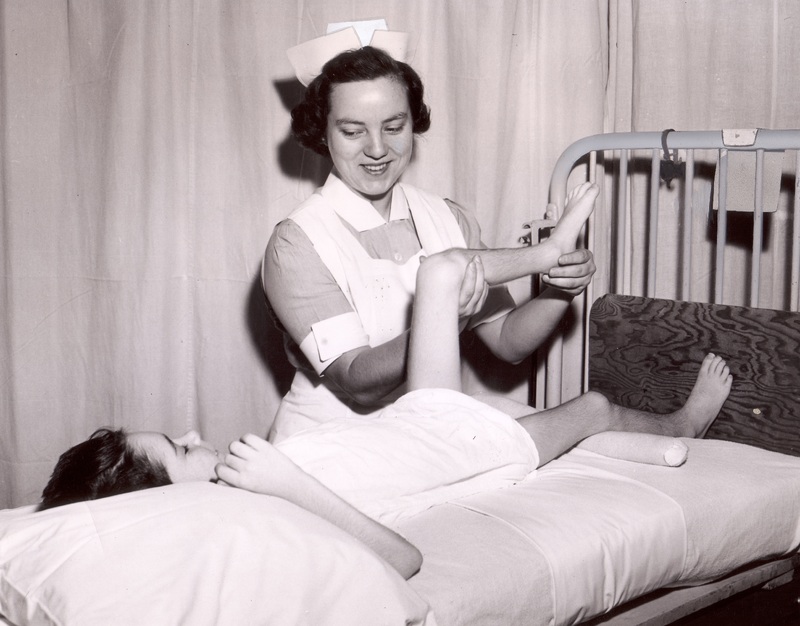
In the years after the war, another way that Simmons nurses met their current moment was throughout the polio epidemics of 1948-1955. One article in the alumnae magazine, The Simmons Review, published in the winter of 1955, reflected on nursing in a pandemic and how it can affect the nurse. Written by Sylvia R. Peabody, the article describes how no skills learned in the classroom can prepare a nurse for coping with working with polio respirator patients. Peabody writes, “She can’t help but feel pretty helpless the first time she looks around at a ward full of droning respirators and rocking beds.” Throughout these epidemics and beyond, Simmons nurses have worked to help patients believe in realistic yet hopeful goals for their health outcomes.
The 1950s also saw additions to the nursing programs in tuberculosis nursing. In 1955, an evening course in control of tuberculosis for graduate nurses was extremely popular due to higher than average case rates in the greater Boston area. The course was developed in response to ways in which tuberculosis care was revolutionized in the mid 1950s, including trends that placed a great emphasis on home care that increased the demand for public health nurses.