Overview
Florence Stratton Allchin (Osaka, Japan) and Neé Sage Thomas (Johannesburg, South Africa), Class of 1906, were the first students to travel internationally to attend Simmons. The daughter of missionaries, Thomas was born in the United States and moved to South Africa prior to attending college. Likewise, Allchin was born in Japan but attended high school in Hawaii and Massachusetts before enrolling at Simmons.
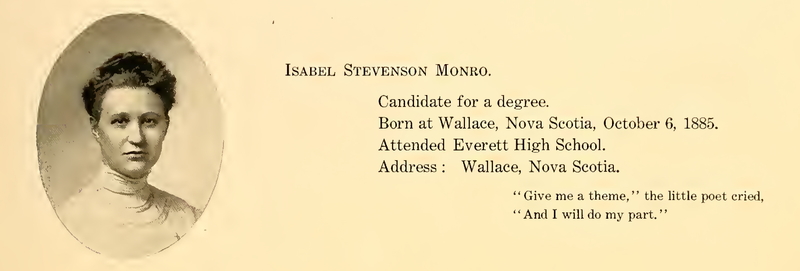
The majority of international students in the early years at Simmons were from Canada and Western Europe (predominantly England and France). Isabel Stevenson Monro, from Wallace, Nova Scotia, was the first international student to graduate from Simmons College in 1907 with a degree in library science. Nicknamed “Bobby,” students in the Class of 1907 wrote that Isabel was characterized by being “tall and dignified of bearing” in addition to her joke-making and fudge concoctions. According to the 1907 yearbook, Monro presumably traveled from Wallace to Boston to attend Simmons, as her birthplace and home address are both listed in Canada. While Marion Ross Elliot (born in Halifax, Nova Scotia) and Frances Katherine McCaffrey (born in Fredericton, New Brunswick) were also members of the Class of 1907, both had moved to Massachusetts and attended high school there before enrolling at Simmons. The majority of international students were enrolled in the Library Science (est. 1902) and Social Work (est. 1904) graduate Schools through the 1960s.
The Immigration Act of of 1924 (Johnson-Reed Act) established fixed quotas based on national origin. The Act completely excluded immigrants from Asia and capped the number of immigration visas at two percent of “foreign-born individuals” of each nationality, determined by the 1890 U.S. national census. “Non-quota immigrants” under the Act included children under 18 years old, those born in Canada (along with other specified countries), and “an immigrant who is a bona fide student at least 15 years of age and who seeks to enter the United States solely for the purpose of study at an accredited school, college, academy, seminary, or university.” After President Calvin Coolidge signed the Act into law on May 24, 1924, academic institutions were then required to be accredited by the Secretary of Labor as a “school for immmigrant students.” By the mid-1920s, students applying to Simmons had to specify their religion, ethnicity, home country, marital status, proficiency in English, and the name of their clergyman, in addition to providing a health certificate.
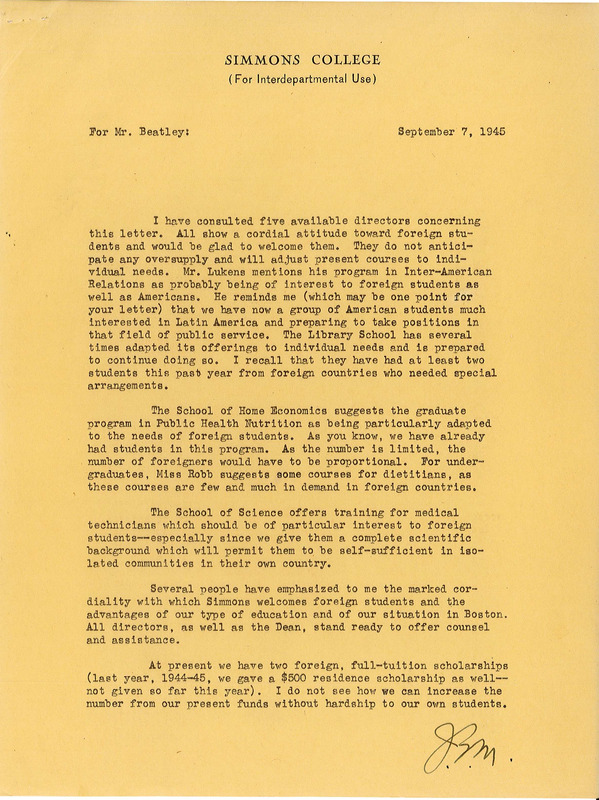
On average, Simmons enrolled eight international students throughout the 1920s. The Simmons Corporation voted on a few tuition scholarship recipients for international students during the 1920s and 1930s; these appear to have typically been awarded to graduate students in the School of Social Work and the School of Library Science. From the Office of the Registrar’s records, it is unclear how many of these scholarships were offered from 1903 to 1939; by 1945, two full-time tuition awards were available to international students. In 1962, the Registrar noted that there were no longer scholarships specifically for international students, although they were still eligible for funding offered through the different Schools.
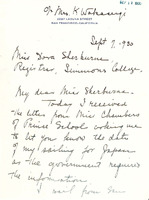
Magda née Olsson (Lindquist) from Sweden was scheduled to start at Simmons as a non-quota undergraduate student in September 1924. President Henry Lefavour (1902-1933) received a letter from the U.S. Department of Labor on August 19, 1924, stating that Simmons must apply and be approved for accreditation if they wished to enroll Olsson. Simmons received its accreditation on August 25, 1924, just four days after the College sent in its application. While Olsson ultimately chose not to attend Simmons, her application triggered the process that made Simmons a school open to international students.
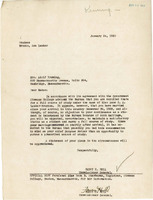
The Bureau of Immigration, under the U.S. Department of Labor, intensely scrutinized international students. If the Bureau suspected a student had come to the U.S. for reasons other than studying full-time, the Commissioner General sent a warning letter reminding them of the conditions of their non-quota visa. In December 1928, Simmons social work student Adolf Kruming (Anne S.A. Lauder Brunton) from England married their partner upon arrival in the United States. The following January, Kruming received a letter from Commissioner General Harry E. Hull demanding her plans to continue studying full-time at Simmons. Hull wrote, “Since your marriage occurred so shortly after arrival, it has occurred to the Bureau that possibly you had this consummation in mind as your chief purpose rather than an opportunity to pursue a prescribed course of study.”
The Simmons Registrar was essential in facilitating communication between the Bureau and students, particularly if any issues with their documentation or visa compliance arose, and received copies of all correspondence sent by the Bureau to students. The Registrar submitted individual reports on international students to the Bureau each semester, detailing their academic and enrollment history, arrival and departure dates to and from the U.S., and means of travel. The majority of students traveled to Simmons by boat(s) from their home countries until the late 1950s. Travel time could take anywhere from 1 to 2 weeks, and students often arrived at a port in New York before making the final transfer to Boston.
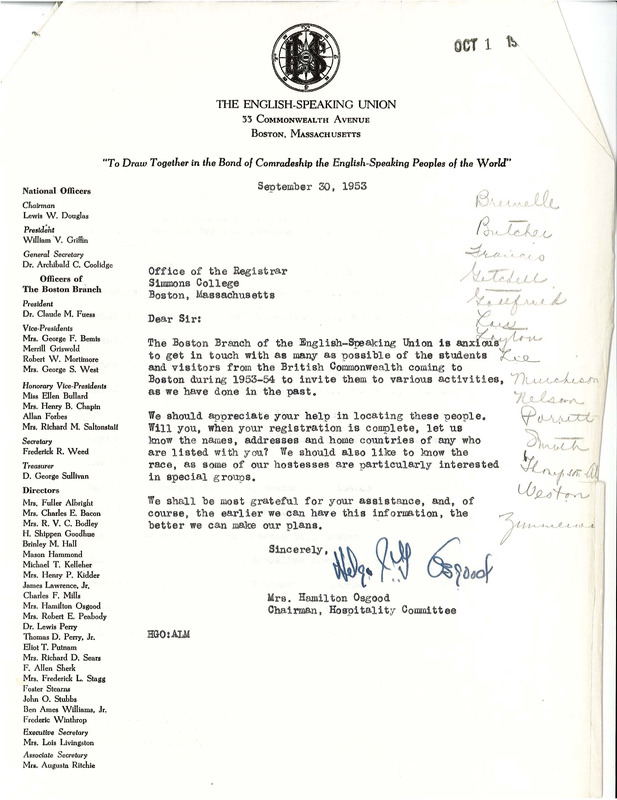
International students had the option to join a variety of international organizations in the greater Boston area. This included the Chinese Students Christian Association, the Clearing House on Student Interchange, the International Student Association of Greater Boston, the Pan American Society of Massachusetts and Northern New England, and the Japanese Student Association of Boston. Before the passage of the 1974 Family Educational Rights and Privacy Act (FERPA), these organizations requested and received international students’ data (e.g., full name, address, date of birth, phone number) from Simmons to compile student directories.
Enrollment of Jewish students increased during the Holocaust, primarily those from Germany and Austria. Jewish students (10) composed 45% of all international students (22) in 1943, and the Simmons Hillel student organization was founded circa 1944. During the WWII incarceration of Japanese Americans, Japanese students were closely surveilled by the State. While on a phone call with Dean Jane Louise Mesick (1925-1949) in April 1943, a Lieutenant from the U.S. Naval First Service Command ordered the Dean to report “even minor disciplinary matter[s]” taken on Simmons’ one Japanese international student at the time.
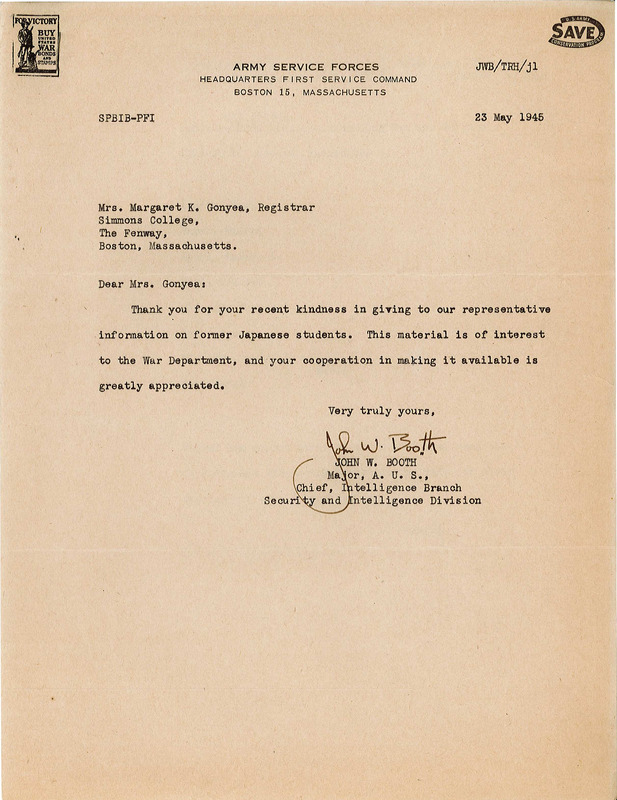
Simmons mailed both the U.S. Navy a list of all current and former students of “Japanese parentage” (five) in 1943 and the U.S. Army Security Intelligence Corps a list of all “Japanese-born” students (six) in 1945. Similarly, the Department of State ordered Simmons to report the number of Chinese international students enrolled at the College in Spring 1951 (three). On average, Asian student enrollment at Simmons was lower than that of students from other countries through the 1960s. The Registrar reported that eight Chinese international students had ever attended the College by 1940, and only one, Clara Wai-Ung Chung (Beijing), had graduated with a Bachelor's degree in library science in 1926.
The Immigration and Nationality Act of 1952 (McCarran-Walter Act) ended the exclusion of Asian immigration, although the national origin quota remained. The U.S. Office of the Historian observes that while the 1952 Act created symbolic opportunities for Asian immigrants, it continued to discriminate against them through limited visa quotas based on race. Although Asian international students often came to Simmons on non-quota student visas, they faced more bureaucratic challenges in obtaining approval from the U.S. Immigration and Naturalization Service, particularly during the Cold War era. Russian international student enrollment was also historically low at Simmons. By April 2001, the Office of the Dean reported that only one international student from Russia had graduated from Simmons (assumedly Henriette Karlovna Derman, 1882–1954).
Asian international student enrollment gradually increased after the passage of the Immigration Act of 1965 (Hart–Celler Act). The 1965 Act eliminated quotas by July 1, 1968, explicitly prohibiting the issuance of immigrant visas by “preference or priority” on the basis of “race, sex, nationality, place of birth, or place of residence.” While the International Club (open to all students) was established by 1926, the Simmons Asian Students Club (Asian Student Association) and the Korean Student Organization were not founded until circa 1979 and circa 1985, respectively.
As part of its “internationalization” and “multicultural” initiatives, the College began actively recruiting international students in the 1980s and 1990s, and invested in expanded international programming. Robert E. White, former U.S. Ambassador to Paraguay (1977–1980) and El Salvador (1980–1981), served as the inaugural 1983 Warburg Chair in International Relations. The Chair teaches special topics courses in international relations and organizes programming throughout their two or three-year term. Simmons also created the Language Institute for English (L.I.F.E.) program in the late 1980s, which aimed to quickly bring international students to a college-level proficiency in English.
During the “internationalization” era, President Holmes went on a recruitment trip to Asia in June 1992. Notably, he visited the Princess Mother of Thailand, Somdet Phra Srinagarindra Baromarajajanani (1900-1995), a Simmons alumna. President Holmes urged the Princess Mother to encourage her granddaughter, Princess Maha Chakri Sirindhorn, to visit Simmons to commemorate the 100th birthday anniversary of her grandfather, Prince Mahidol of Songkl. Additionally, President Holmes visited multiple universities (exchange programs) and high schools (college recruitment) in East and Southeast Asia as part of the trip, including Ewha Womans University in Korea, Sacred Heart University in Tokyo, Taipei American School in Taiwan, and Mater Dei School in Bangkok.
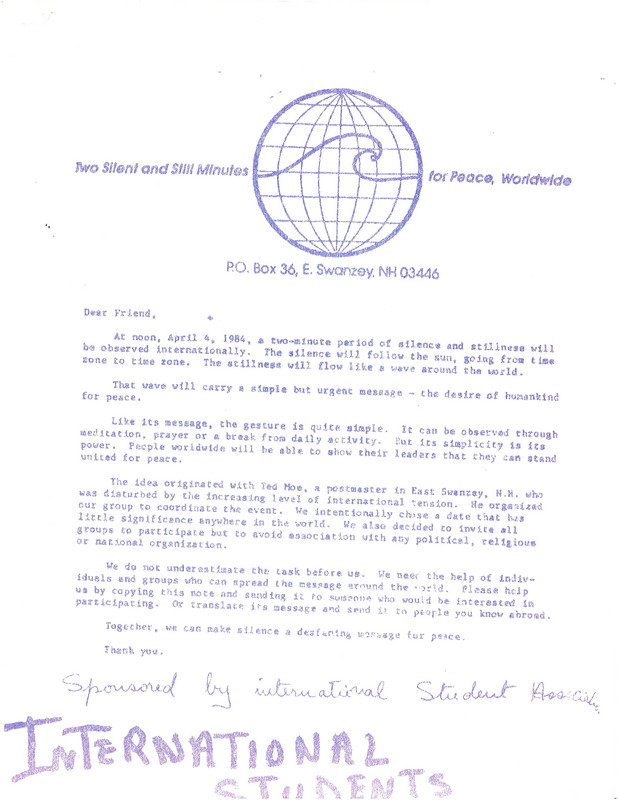
By the early 1980s, the College was receiving approximately 60 applications a year (47 international students, undergraduate and graduate, were enrolled in 1983). A number of Simmons student organizations with high concentrations of international students had a period of high activity in the late 1980s and 1990s. The International Students Association (ISA), not to be confused with the International Club of the 1920s, was founded in 1979. The ISA hosted a variety of programming for its members and the broader Simmons community, such as seminars, panels, its annual Awareness Week, and dances.
In the Spring of 1989, Latine students left the Black Hispanic Organization (BHO) to form the Latin American Spanish Speaking Organization (LASSO), named after the Spanish word for bow, lazo. The name was intended to represent the organization’s purpose as a ‘bow’ and ‘bond’ connecting the Latin community together on and off campus. In 1995, LASSO became the Organización Latino Americana (OLA). LASSO/OLA collaborated with other cultural heritage organizations at Simmons (e.g., International Student Association, Black Students Association, Asian Student Association) to advocate for justice and equity in administrative practices, secure resources to support a diverse student body, and organize educational events.
The Simmons Office of Institutional Research and Assessment reports that approximately 698 international students across 97 countries have graduated from the University between 2006 and 2024. Students from India, China, Saudi Arabia, Japan, and Canada were the highest represented during this time period. The Simmons University Center for Global Education also found that, on average, 70 undergraduate and graduate international students were enrolled at Simmons each semester from 2020 to 2026 (98 students, representing 36 countries, were enrolled in Spring 2026).
This exhibit recognizes and celebrates the leadership, expertise, curiosity, and community stewardship of international students. In the following exhibit pages, the stories of international students Henrietta Derman (1882–1954), Sangwan Talapat (1900-1995), and Jeongyeon Choi (Class of 2026) are highlighted.