Redefining the Workforce
The contents of the Simmons Review, from the close of World War I and through World War II, reveal much about the evolving roles of women in work and society. It offers insights into what it meant to unite passion with purpose in war and peacetime. Through the voices of students, faculty, and staff in these early issues, we discover how Simmons women not only responded to a changing nation, but helped lead and shape it through meaningful, purposeful work.
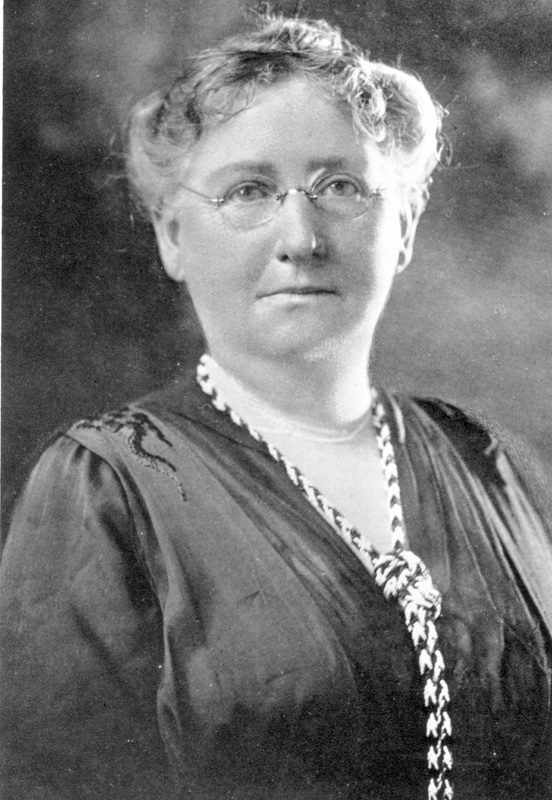
Dean Sarah Louise Arnold: At the Helm of Change
Sarah Louise Arnold, the first dean of Simmons College, author of several textbooks, lifelong educator, suffragist, and national president of the Girl Scouts, noted in the Simmons Review that the purpose of education had evolved in tandem with social change. She believed education was essential not just for personal growth but for democracy itself. She encouraged school curricula that focused on developing character, practical skills, and a sense of civic responsibility which would prepare individuals to contribute to the common good. She further believed that educational systems had to adapt to meet community needs (Arnold, 1920).
Through John Simmons' founding mission to prepare women for independent livelihoods with practical and vocational training, Simmons College addressed a gap in traditional education that had left women unprepared to participate in the workforce. Simmons College embodied the idea that education should respond to societal needs while strengthening democracy by empowering individuals to contribute meaningfully to their communities (Arnold, 1920). The curriculum combined technical instruction with broader intellectual and moral development, helping women become independent, skilled, and socially responsible citizens. Its success influenced broader educational trends, showing that vocational and liberal education can coexist.
In the words of Arnold (1919):
"Education in America has always meant education for democracy. But education does not manufacture; a school is not a machine. The ideals, the habits, the motives, the achievements of the sons and the daughters of America were to be related to the growth of that democracy"
During World War I, Dean Arnold made a national impact when she was tasked by the Federal Food Administration to speak at colleges and universities across the nation, which included advocating for women's rights and education. She was a key figure in the Boston suffrage movement, active in both the Boston Equal Suffrage Association for Good Government and the Massachusetts Woman Suffrage Association, where she created a committee to educate women on government in preparation for voting. She gave her final suffrage speech in 1920 to celebrate the passage of the 19th Amendment. Sarah Louise Arnold’s legacy can also be remembered by the song she wrote for Simmons, “The College Hymn.”
The line, "make us thy children, generous and just, ready for service, and worthy of trust” underscores the central theme of education for service and uniting passion with purpose.
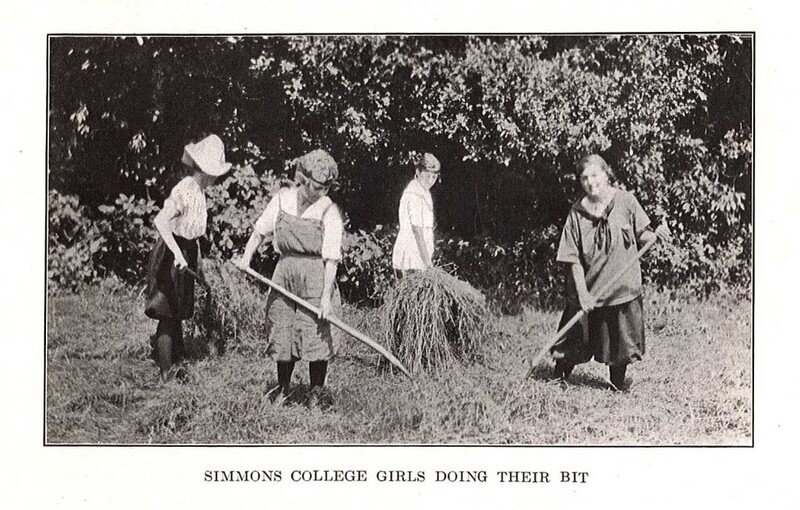
Wartime Necessities: Redefining Women’s Capabilities
In the shadow of World War I, the Simmons community contributed directly to national efforts taking on roles such as typing and stenography, food conservation, and general service through the Volunteer Service Bureau. This willingness to serve illustrates a central theme of the period. Work was not just a job, but a responsibility tied to a larger purpose. Institutions like Simmons were especially valuable because they were already training women in practical and technical fields. The war demonstrated that women’s education, especially technical training, was essential to national service. While many institutions struggled to adapt to wartime demands, Simmons was uniquely positioned to respond.
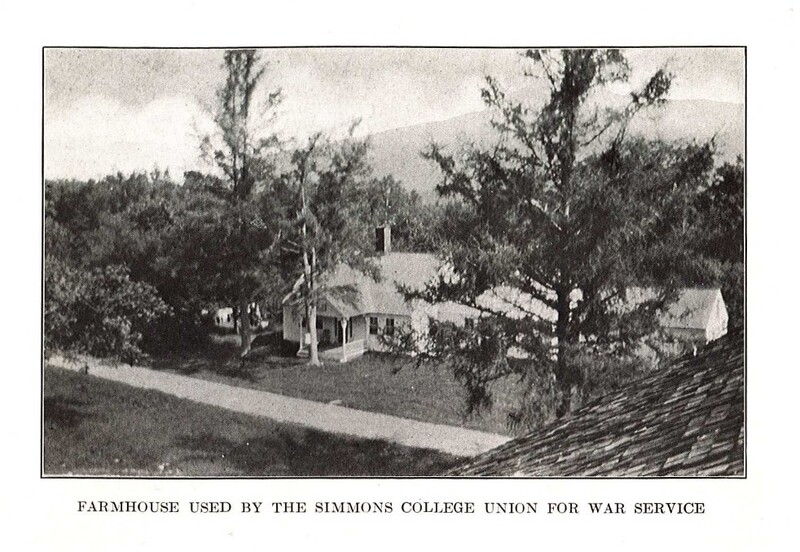
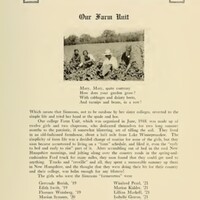
This sense of purpose extended far beyond 300 The Fenway, as women across the country mobilized during World War I in unprecedented ways. With strained resources groups of students took on agricultural labor, working long hours in the fields to support national food production. The Simmons College Union for War Service was formed during WWI in response to these needs, and the Simmons Farm Unit was organized during the summer months. Students or 'farmerettes' lived in a farmhouse in New Hampshire, working for 20 cents an hour. Their work involved hoeing corn and beans, haying, piling wood, and weeding acres of turnips. They endured daily rides in a Ford truck, “minus cushions and shock absorbers”, to carry them to and from their work and earned $4.80 per person per week (Gilbert, 1918, p, 3).
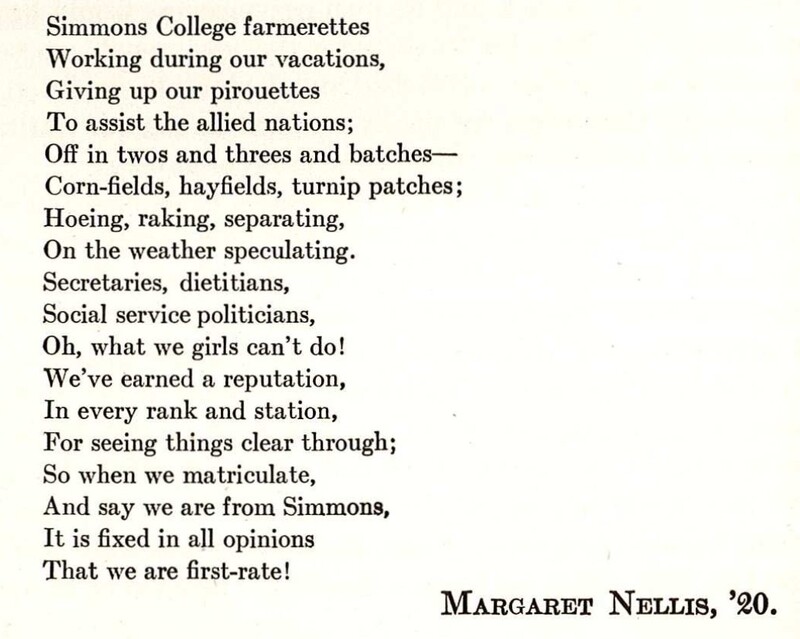
While removed from their academic studies, this work became one of the more formative experiences described in the articles. Farmerettes reflected on the profound personal impact of this labor. Margaret Nellis offers that the most valuable outcome was, “the spirit of independence and resourcefulness which we have gained from it” (Gilbert, 1918, p.3).
She continued, “you are especially anxious to know the opinion of the girls themselves on the subject of Farmeretting, and I want to assure you that if you put the question to each one individually, the response would be unanimous: 'You just ought to try it.'” (Gilbert, 1918, p.3).
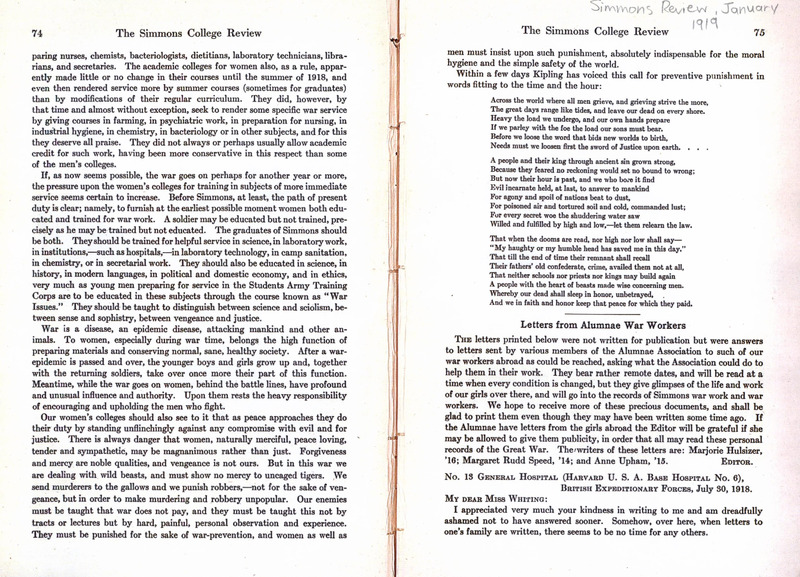
These experiences also challenged preconceived notions of gender roles. Frederica Gilbert (1918) acknowledged that even if women did not produce as much as men in an equal amount of time, “in these days when our men are needed ‘over there’ it is surely worthwhile to utilize woman power wherever possible” (p.3). This pragmatic argument reflects wartime necessity, but it also signals a broader shift in thinking.
Women were no longer excluded from certain types of labor due to tradition. Instead, their contributions were evaluated in terms of effectiveness and need. As students reflected on how transformative the experience was, they also described adapting to difficult conditions and learning resilience in hardship. Nellis noted that despite long hours and physical strain, “we got nearer to life in this way, and learned to appreciate the toil that has been required to give us the advantages which we had hitherto accepted” (p.4). This recognition of the value of labor, both individually and collectively, was clearly central to the goal of purposeful work.
Answering the Call: Establishing an Ethos of Service
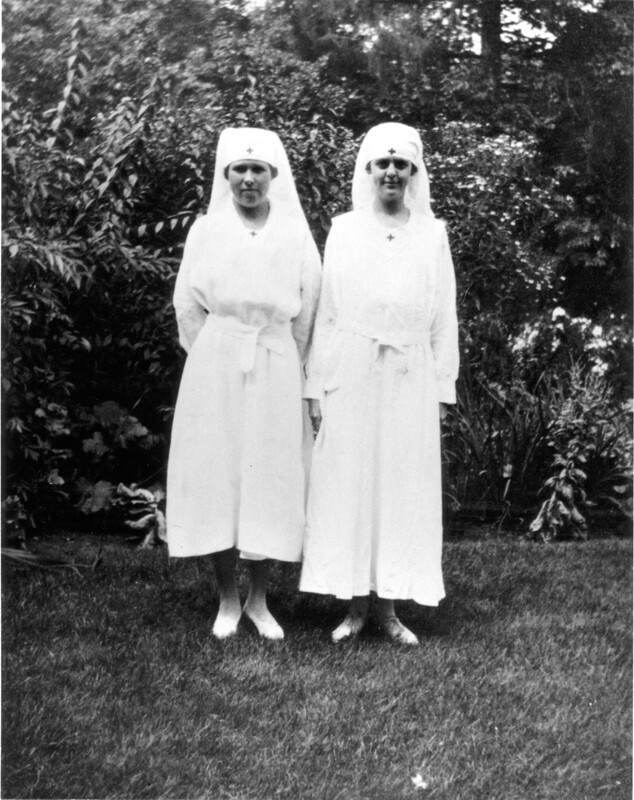
As the outbreak and aftermath of World War I altered expectations for women’s participation in public life, Simmons students organized, volunteered, and mobilized. Many students were enrolled as members of the Volunteer Service Bureau of the American Red Cross and Special Aid Society. Charlotte Babcock (1918) mused, “the important thing is to be ready and immediately available when the call comes” (p. 42).
Following World War I, the American Red Cross moved its focus from wartime relief efforts to one dedicated to public health and disaster relief. One article captures this extraordinary effort as evidence of a collective need to “to be of service to suffering humanity in war-torn Europe.” A sense of patriotism can be felt in these words, “Even if peace comes, the demands of suffering, starving humanity will have to be met by America, the only land able to succor and aid” and “It is hoped that all Americans will become members of the Red Cross as a reconsecration of the whole American people, an inspiring reassertion to mankind that in this hour of world tragedy, not to conquer but to serve is America's supreme aim” (“What the American Red Cross”, 1918, p. 40).
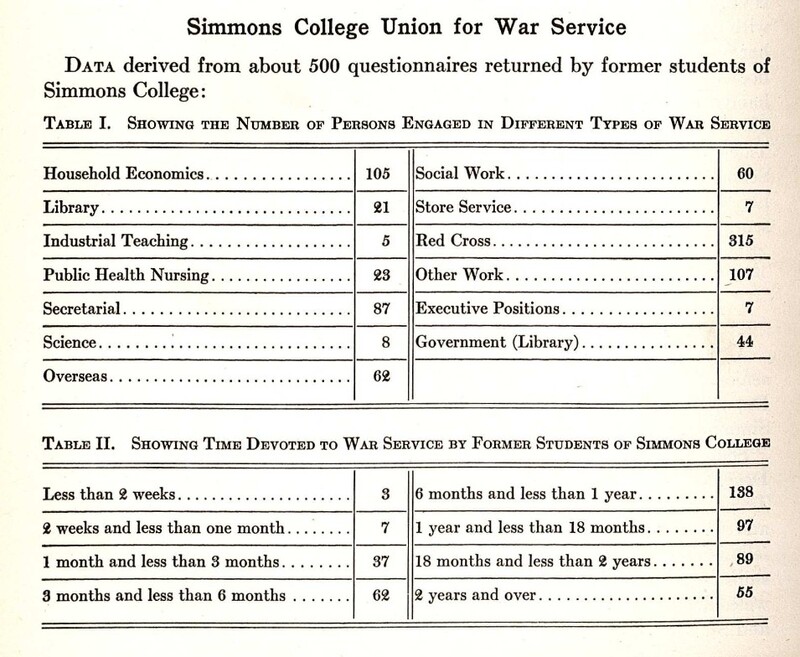
A letter from a Simmons alumna working in France provided a personal perspective on the experience of bringing her training and dedication directly to the war effort. Describing her hospital work, Bertha Davis wrote:
“[it was] intensely satisfying because I believe it has done some good” (Davis, 1919, p.239).
Bertha visited four hospitals each morning and went through each ward delivering supplies to patients. Soldiers often went unpaid for many months and could not acquire things like handkerchiefs, toothbrushes, shaving brushes, sweaters, magazines, writing paper, and cigarettes, which the Red Cross provided. The value of Davis's labor lay in its impact on the lives of service members.
A Lasting Transformation
By the late 1930s, on the eve of another global conflict, the changes set in motion during and after WWI had fundamentally reshaped women’s roles in American society. The experiences of women of the Simmons community demonstrate that this transformation was lived, worked, and felt in everyday actions. Women took on new responsibilities, developed new skills, and redefined what it meant to contribute to society. The women of Simmons did more than respond to historical change, they helped shape it. By uniting their passions with purposeful work, they expanded the possibilities of education, redefined the value of women’s labor, and contributed to the broader evolution of American society. This era of patriotism, a strong work ethic, and willingness to put forth collective good through service to improve society in the face of adversity persevered through the interwar period and beyond.
References
Arnold, S. L. (1920). The part in Simmons education in education for democracy. The Simmons College Review, 2(5), 143–149. https://simmons.access.preservica.com/uncategorized/IO_59b7dffa-24b8-48ed-913a-9d6b86f24d26/
Babcock, C. F. (1918). The volunteer service bureau. The Simmons College Review, 1(2), 42–43. https://simmons.access.preservica.com/uncategorized/IO_e5f0f3bd-1518-4301-b4e7-d1294d680d45/
Davis, B. (1919). Letter from a war worker abroad. The Simmons College Review, 1(7), 238–242. https://simmons.access.preservica.com/uncategorized/IO_7c62b3a5-efaf-4829-a7c9-491357d06518/
Gilbert, F.H. (1918). The Simmons farm unit. The Simmons College Review, 1(1), 2–3. https://simmons.access.preservica.com/uncategorized/IO_01b169d0-ab0d-410e-bf9f-bd7f63a51723/
Nellis, M. (1918). Simmons would a-farming go. The Simmons College Review, 1(1), 3–5. https://simmons.access.preservica.com/uncategorized/IO_01b169d0-ab0d-410e-bf9f-bd7f63a51723/
Sedgwick, W.T. (1919). Women’s colleges during wartime. The Simmons College Review, 1(3), 71–55. https://simmons.access.preservica.com/uncategorized/IO_bafe4bbc-5ed7-46d1-b4eb-adf169f70ea8/
What the American Red Cross has done for humanity. (1918). The Simmons College Review, 1(2), 39–40. https://simmons.access.preservica.com/uncategorized/IO_e5f0f3bd-1518-4301-b4e7-d1294d680d45/